Dry Eye vs. Carrollton Allergies: How to Tell the Difference
Are your eyes red, itchy, or watery? You might think it's allergies. But dry eye can cause the same problems. If you treat the wrong one, you won't feel better. Here's how to tell them apart.
Quick Answer
Itchy eyes = usually allergies
Burning, stinging, or gritty eyes = usually dry eye
Symptoms started suddenly, tied to pollen, pets, or dust = usually allergies
Symptoms built up slowly during the day = usually dry eye
Sneezing and a runny nose too = usually allergies
Worse after screen time or by end of day = usually dry eye
Not sure, or symptoms won't go away? See an eye doctor to know for sure
Why People Mix Them Up
In my practice, this is one of the most common mix-ups I see. Patients often come in convinced they have "bad allergies" after months of using allergy drops with no relief — only to find out it was dry eye all along.
Dry eye and eye allergies can look a lot alike. Both can cause redness, itching, and watery eyes. Watery eyes trip people up the most. It sounds like the opposite of "dry" eyes. But it's actually a common sign of dry eye. When your eyes don't have enough good tears, they make extra watery tears to try to fix it.
So watery eyes don't always mean allergies. They might mean dry eye instead.
How to Tell Them Apart
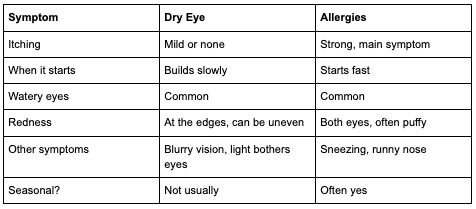
Itching is the biggest clue. Strong, constant itching usually means allergies — the American Academy of Ophthalmology notes it's the main symptom that sets allergies apart from other eye conditions. Dry eye feels more like burning or stinging. It can also feel like sand is stuck in your eye. If you want to rub your eyes because they itch, it's likely allergies.
Think about when it started. Allergies often start fast, right after something sets them off. This could be pollen, a pet, dust, or new soap. Dry eye tends to build slowly during the day. It often gets worse after using screens, reading, or being in dry or windy air.
Check for other symptoms. Allergies often come with sneezing, a runny nose, or an itchy throat. Dry eye usually stays in the eyes. It may also cause blurry vision that gets better when you blink.
One eye or both? Allergies usually affect both eyes the same way. Dry eye can affect both eyes too, but often one eye is worse than the other.
Look at how your eyes look. Allergy eyes often look puffy, especially around the lids. Dry eyes tend to look red at the edges, without much swelling. They may also look dull instead of shiny. Discharge is another clue — clear, watery discharge can happen with both allergies and dry eye, but thick yellow or green discharge, or eyes that feel stuck shut in the morning, can mean something else going on. Read more about what causes crusty eyes in the morning.
Wear contacts? Pay attention to timing. If your eyes get worse late in the day after wearing lenses, that points to dry eye. If your eyes react right after you put lenses in, that points to allergies.
Quick Comparison Chart
Why It Matters to Get This Right
If you use allergy medicine for dry eye, it can make things worse. Many allergy drops and pills dry out your eyes even more. And if you use dry eye drops for allergies, they won't stop the itching or swelling. That's because allergies come from your immune system, not a lack of tears — you can read more about how dry eye develops on the American Academy of Ophthalmology's dry eye page.
You can also have both at the same time. This happens a lot during allergy season. Allergies can hurt your tear film, which can lead to dry eye too. If your eyes still feel bad after treatment, this could be why.
Want to know more about what causes dry eye in the first place? Read our post on why your eyes might be so dry. Simple changes can help too — learn how omega-3s can support dry eye relief.
Frequently Asked Questions
Can you have dry eye and allergies at the same time? Yes. This is actually very common, especially during allergy season. Allergies can irritate the surface of your eye and disrupt your tears, which can trigger or worsen dry eye. If treatment for one problem doesn't fully clear up your symptoms, the other condition may be part of the picture too.
Do allergy eye drops help dry eye? Not usually, and they can sometimes make dry eye worse. Many allergy drops work by drying up the itchy, watery response your immune system creates. If your real problem is a lack of quality tears, these drops can leave your eyes feeling even drier.
Do artificial tears help with eye allergies? They can help a little. Artificial tears rinse allergens off the surface of your eye and add moisture, which may ease irritation. But they won't stop the itching and swelling caused by an allergic reaction the way an actual antihistamine eye drop can.
Is it dry eye or pink eye (conjunctivitis)? Pink eye usually causes more redness, swelling, and often a colored discharge, and it can be contagious if it's viral or bacterial. Dry eye tends to cause more burning, grittiness, and light sensitivity without the same spread risk. If you're unsure, especially with discharge or crusting, it's best to have an eye doctor check.
How long does it take to know if it's dry eye or allergies? If over-the-counter treatment doesn't improve things within a week or two, or if symptoms come back again and again, it's worth getting a proper diagnosis instead of guessing. An eye doctor can usually tell within one visit.
When to See an Eye Doctor
See a doctor if drops don't help after a week or two. Also see a doctor if your symptoms are bad, or if you have blurry vision, eye pain, or discharge. An eye doctor can tell you exactly what's going on. This helps you use the right treatment the first time, instead of guessing.
Honestly, even after years of practice, there are cases where it's genuinely hard to tell the two apart just from symptoms alone — that's when a quick exam with the right equipment makes all the difference. If dry eye sounds like what you're dealing with, learn more about our dry eye treatment options at West Georgia Eye Care, or schedule an evaluation with our team in Carrollton, GA.