
What is a Stye?
Causes, symptoms, and treatment, and when to see an eye doctor in Carrollton, GA
That red, sore bump on your eyelid has a name, a cause, and a fix. Here's everything you need to know.
A story to start
It started on a Tuesday morning. Marcus woke up, shuffled to the bathroom mirror, and froze. There was a red, swollen bump right on the edge of his eyelid — tender to the touch, puffy, and angry-looking. He'd never had anything like it before. His first thought? Something was seriously wrong.
He grabbed his phone and typed into Google: "red bump on eyelid." The results were not reassuring. He saw words like "infection," "abscess," and "surgery." By the time he called our office, he was convinced he was going to lose the eye.
He had a stye. And he was going to be just fine.
If Marcus's morning sounds familiar, you're definitely not alone. Styes are one of the most common eye conditions we see at West Georgia Eye Care — and one of the most Googled. People wake up, see that bump, and immediately fear the worst. The good news is that most styes are very manageable, and understanding what's actually happening makes all the difference.
What exactly is a stye?
A stye — also spelled "sty" and medically called a hordeolum — is a small, painful bump that forms on or inside your eyelid. Think of it like a pimple on your eyelid. Just like your face has pores and oil glands that can get clogged and infected, so does your eyelid.
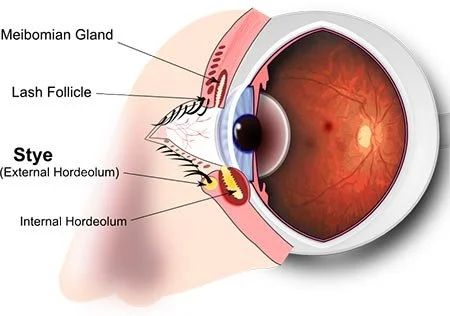
Your eyelid is lined with tiny oil glands called meibomian glands. These glands release a thin layer of oil that keeps your tears from evaporating too quickly — they're actually a big part of healthy eye comfort. When one of those glands gets clogged or a hair follicle at the base of your eyelashes gets infected with bacteria, a stye forms. The result is that red, sore, swollen bump that makes you look like you went a few rounds in the boxing ring.
The most common bacteria responsible? Staphylococcus — the same type of bacteria that causes many skin infections. It lives harmlessly on your skin most of the time, but when it finds its way into a clogged gland, trouble starts.
"A stye is basically a pimple on your eyelid. Uncomfortable? Yes. Scary? No. Treatable? Absolutely."
— Dr. Krista Stapleton, O.D., West Georgia Eye Care
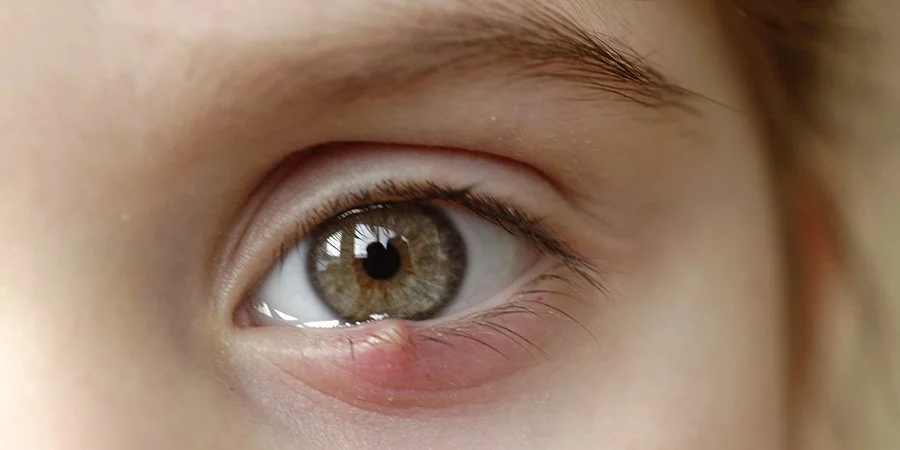
Types of styes: external, internal, and chalazion
Not all styes are the same. There are two main kinds, and knowing which one you have helps you understand what to expect:
External stye
Forms on the outside edge of your eyelid, usually at the base of an eyelash. This is the most common type — the classic red bump you can see and feel. It looks like a small pimple right on your lash line and often has a visible yellow center as it fills with pus.
Internal stye
Forms on the inside of your eyelid — the part that touches your eyeball. You can't always see it from the outside, but you'll definitely feel it. Internal styes tend to be more painful because they press against the surface of the eye. They also take longer to heal.
Chalazion — the cousin
Often confused with a stye, a chalazion is a painless lump caused by a blocked oil gland that isn't infected. It tends to be firmer, less red, and doesn't usually resolve on its own as quickly. If a stye doesn't drain and heal, it can become a chalazion over time.
What causes a stye?
Styes aren't random — there are real reasons they develop. Here are the most common triggers our team sees:
Touching your eyes with dirty hands
This is the number one cause. Every time you rub your eyes with unwashed hands, you're potentially introducing bacteria directly to your eyelid glands. It's a quick route from your fingertips to a stye.
Old or expired makeup
Mascara, eyeliner, and eye shadow are breeding grounds for bacteria over time. Using old makeup — especially anything applied near the lash line — is one of the most common stye triggers we see, especially in women.
Sleeping in your makeup
Going to bed without removing eye makeup blocks your eyelid glands overnight. Do this regularly and you're creating the perfect conditions for a stye to form.
Wearing contacts without clean hands
Putting in or taking out contact lenses without washing your hands first transfers bacteria directly to your eye area — and increases stye risk significantly.
Stress and poor sleep
When your immune system is run down from stress or lack of sleep, your body is less equipped to fight off the bacteria that cause styes. Many patients notice styes appear during particularly stressful weeks.
Underlying dry eye disease
This one surprises people. When the meibomian glands — the same ones involved in dry eye — become chronically clogged or inflamed, styes become much more likely. Treating dry eye reduces how often styes come back.
What does a stye feel like?
In case you're wondering if what you have really is a stye, here's what to look for. Most styes come with some combination of these symptoms:
A red, tender bump on the edge of your eyelid — on the outside or the inside
Swelling around the eye that can sometimes spread to the whole eyelid
A feeling of pressure, soreness, or achiness when you blink
Crustiness or discharge along the lash line, especially in the morning
Sensitivity to light in some cases
A small yellow dot in the center of the bump — that's the stye coming to a head, like a pimple
How to treat a stye at home
This is where a lot of people go wrong. Here's the honest do and don't list:
DO THIS
Apply a warm compress 3–4 times a day for 10–15 minutes
Wash your hands before touching your eye area
Remove contact lenses and wear glasses while it heals
Throw away any eye makeup used around the time the stye appeared
See an eye doctor if it doesn't improve in a week or two
DO NOT DO THIS
Squeeze, pop, or try to drain it yourself
Wear eye makeup while you have a stye
Wear contact lenses until it's fully healed
Ignore it if it's growing, spreading, or very painful
Share towels or washcloths with others
Use over-the-counter stye "remedies" without checking first
The warm compress is genuinely the most effective home treatment for a stye. The heat softens the blocked oil in the gland and encourages it to drain naturally. Think of it like loosening a stuck jar lid with warm water — the heat does the work so you don't have to force it. Ten to fifteen minutes, three or four times a day, with a clean warm cloth. That's it.
When to see a doctor for a stye
Most styes resolve on their own within one week with warm compresses. But please come see us if:
The stye is getting larger instead of smaller after a few days
The swelling spreads beyond the eyelid to your cheek or other parts of your face
You develop a fever
Your vision changes at all
The stye keeps coming back in the same spot
IMPORTANT
A recurring stye in the same location should always be evaluated — in rare cases it can signal something that needs closer attention.
Stye not getting better after a week?
Our team at West Georgia Eye Care can help — we'll evaluate it and get you on the right treatment plan quickly.
What will the eye doctor do for a stye?
When you come in to see us, we'll examine the stye and determine the best course of action based on how it looks and how long you've had it. Depending on what we find, treatment options include antibiotic eye drops or ointment to clear any active infection, a prescription steroid to reduce inflammation and swelling, or — a simple in-office procedure to heat and soften the gland. Most patients feel relief very quickly afterward.
We'll also check whether an underlying condition like dry eye disease or meibomian gland dysfunction is contributing to your styes. If you're getting styes repeatedly, that's often the missing piece — and treating the root cause is what actually stops them from coming back.
How to prevent styes from coming back
Once you've had one stye, your chances of getting another go up — especially if the underlying cause isn't addressed. Here's how to reduce the odds:
Wash your hands before touching your face or eyes
Simple, effective, and the single best prevention habit you can build.
Replace eye makeup every three months
Mascara especially. That wand goes in and out, in and out — it becomes a bacteria delivery system over time. When in doubt, throw it out.
Never sleep in your makeup
Always remove eye makeup completely before bed. Even just a few nights of skipping this can clog your eyelid glands.
Do daily lid hygiene
A gentle lid scrub — or lid wipe along the lash line — keeps your eyelid glands clear. We can recommend the right products for your specific situation.
Address dry eye if it keeps coming back
If you're getting styes regularly, your meibomian glands may be chronically blocked. We screen for this at every comprehensive exam and can get you started on a dry eye treatment plan that actually prevents the cycle from repeating.
Frequently Asked Questions about Styes
Can a stye go away on its own?
Yes — most styes resolve on their own within 7 to 14 days with regular warm compresses. The heat encourages the blocked gland to drain naturally without any intervention. That said, if your stye isn't improving after one week, or it's getting larger or more painful, come see us. We can speed up the process significantly and make sure nothing bigger is going on.
Are styes contagious?
Not in the traditional sense — you can't "catch" a stye from someone else the way you catch a cold. However, the bacteria that cause styes can spread through shared towels, washcloths, or makeup. Keep those things to yourself while you have a stye and for a week or so after.
How long does a stye last?
Most styes resolve on their own within 7 to 14 days with regular warm compresses. Internal styes and chalazia can take longer — sometimes several weeks. If yours hasn't improved after one week, come in and let us take a look.
Can I wear makeup with a stye?
We strongly recommend skipping makeup around the eye until the stye is completely healed. Applying makeup to the area can introduce more bacteria and prolong healing. And throw away any makeup you were using when the stye appeared — it may be contaminated.
Can I wear contacts with a stye?
It's best to switch to glasses until the stye is fully healed. Contact lenses can irritate the area, slow healing, and increase infection risk. If you're not sure, just call us — we're happy to advise based on your specific situation.
Why do I keep getting styes in the same spot?
Recurring styes in the same location often point to a chronically blocked meibomian gland or underlying dry eye disease. This is something we evaluate carefully at West Georgia Eye Care because treating the root cause is what actually breaks the cycle. A stye in the same spot more than twice should definitely be examined.
Is a stye the same as pink eye?
No — they're different conditions. Pink eye (conjunctivitis) causes redness across the white of the eye and often discharge, and it spreads easily. A stye is a localized bump on the eyelid. Both should be seen by an eye doctor if they're not clearing up, but they're treated differently.
Where can I get a stye treated near Carrollton, GA?
Right here at West Georgia Eye Care on Dixie Street. We see patients with styes regularly and can evaluate, treat, and help you prevent them from coming back. We serve patients from across the area including Villa Rica, Bremen, Bowdon, and Douglasville.
Back to Marcus
Marcus sat in the exam chair looking sheepish. "I really thought it was serious," he said. Dr. Stapleton smiled. "It is worth taking care of — but you're going to be fine." She gave him a warm compress routine to follow at home and a small tube of antibiotic ointment just to be safe. She also noticed his meibomian glands were showing early signs of dry eye disease — the kind of thing that leads to repeat styes if left unaddressed — and scheduled him for a dedicated evaluation. Two weeks later, Marcus's eye was completely back to normal.
The bottom line
A stye is uncomfortable, a little alarming the first time you get one, and very common. The good news is that most of them heal well with simple warm compress treatment at home. The even better news is that if yours doesn't, or if they keep coming back, there are real answers and real treatment options that can help.
Our team is here whether you need a quick evaluation, a treatment plan, or just someone to tell you that yes — you're going to be okay.
Got a stYE that won't go away?
Don't wait it out and wonder. Our team can evaluate your stye, recommend the right treatment, and make sure nothing bigger is going on. We're accepting new patients and most insurance plans are welcome.