
A Borrowed Screener, a Pocketful of Screws, and 50 Kids in Nicaragua Closer to Seeing Clearly
Most of what we did this year in Nicaragua didn't come with an instant payoff. Vision screening doesn't work like the movies — there's no row of kids putting on new glasses and gasping at a suddenly-sharp chalkboard. You measure, you diagnose, you write down a prescription, and then you wait. For most of the kids we saw, "clarity" is still a few weeks and a $50 pair of glasses away, made by a local eye doctor they may not see again for months.
Where This Story Actually Starts
Last year, I went to Nicaragua for the first time — alongside my brother-in-law and sister-in-law and about 25 others — to help in whatever way was needed at a school that runs from 1st through 11th grade (11th grade is graduation there). I wasn't an "eye person" on that trip. I was just an extra set of hands.
But somewhere in the middle of that week, a friend handed me a pair of broken glasses and basically refused to accept that they couldn't be fixed. The screw had fallen out and was nowhere to be found. We didn't have the right tool, the right screw, or really any business thinking we could pull this off. We found a tiny screwdriver; that was a decent start. But that wasn't enough, so I took a screw out of my own glasses and put it into hers.
When we got them back on her face, she sobbed.
I want to be clear about why that moment hit as hard as it did: "town" is a 20-minute drive from where she lives, and a 20-minute drive in Nicaragua is nothing like a 20-minute drive here. Travel isn't simple. There's no telling how long she would have gone without being able to see clearly if we hadn't happened to be there with a tiny screwdriver and a spare screw.
I took a picture of a little girl that week, too — one with the most beautiful eyes I think I've ever seen. I still have it. I think about her a lot when I think about why this work matters.
Déjà Vu, On Purpose
This year, I packed screws, nose pads, and tiny screwdrivers specifically to leave behind at the school's clinic, so that fix wouldn't have to depend on me showing up again with a spare part from my own face. See what we started with here.
And — I'm not kidding — a kid walked up to me with broken glasses again this year. Same problem, different child. Except this time I had what I needed in my bag, and I fixed them on the spot. That's the kind of full-circle moment you can't really plan for. You can only show up prepared enough for it to happen.
What the Screener Actually Did
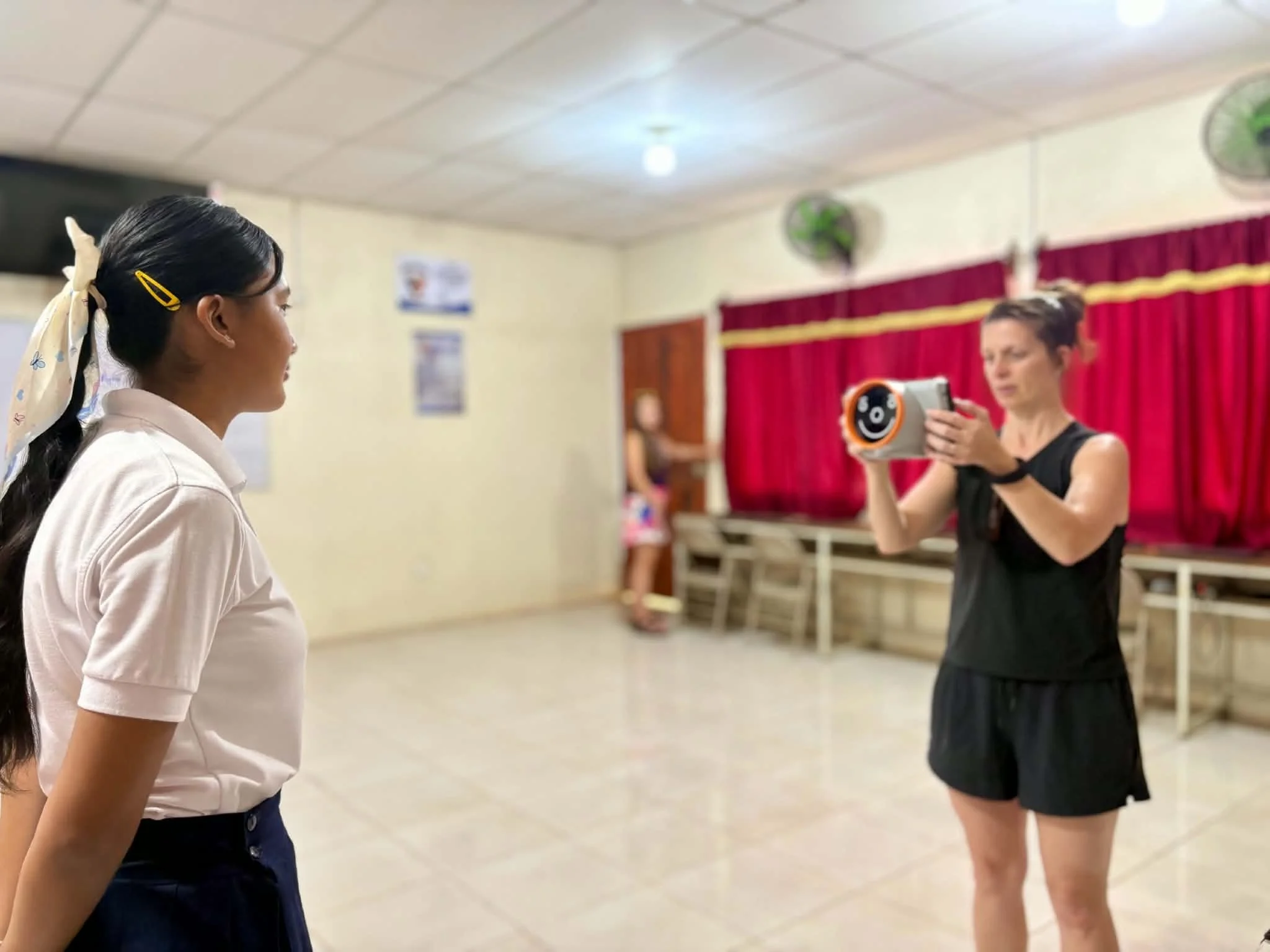
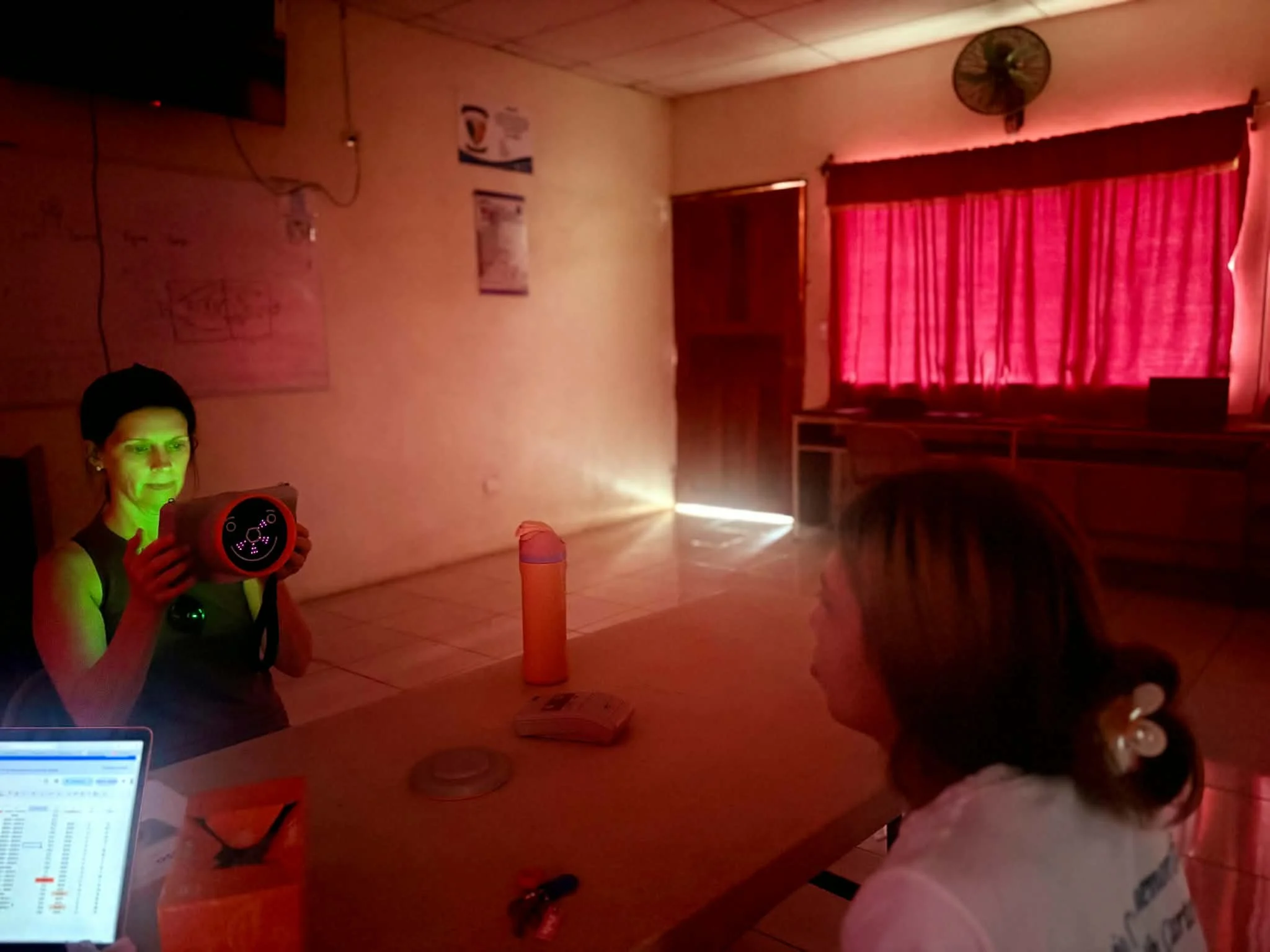
This year I also wanted to try something new: spend a day on campus with the school's doctor doing actual vision screenings and prescriptions, instead of just general help. I'd been relearning the "old school" portable screening technique we normally use — the kind that takes practice and patience — when Carol walked into my office and offered me the vision screener the Carrollton Lions Club had purchased.
I cannot overstate how much that mattered.
The doctor in Nicaragua had already done an eye-chart check on every student from 7th through 11th grade to see who was struggling to see. By the time I arrived, we had a list of kids who needed a closer look — and instead of working through the slower manual process, we used the Lion’s Club screener to get straight to an usable prescription.
What we found was almost exactly what you'd find in any school in the U.S.:
Some kids were wearing glasses that weren't even close to the right prescription.
Some had lost their glasses entirely.
Some had no idea they needed glasses at all.
Some kids were genuinely excited at the idea of seeing clearly. Others were nervous about wearing glasses for the first time.
Kids are kids, wherever you put them.
We didn't stop at the students. We screened a handful of teachers too, and got to hand reading glasses to two of them on the spot. Their near vision cleared up instantly, and the reaction was somewhere between disbelief and joy.
One woman who works in the school's sewing room came through as well. When we screened her, the device simply wouldn't get a reading on her left eye — which told me right away this wasn't a "needs glasses" situation, it was something bigger. She's now scheduled to see a specialist later this month. That's not a small thing in a place where specialists aren't around the corner.
The Math of What's Still Needed
By the end of the week, we had a clearer picture of the need:
25 high school students need glasses
An estimated 25 more in the elementary grades likely need them too
A local eye doctor in Nicaragua can make a pair of glasses for $50
The week I got home, I put together a quick video about what we'd seen and what it would take to help. West Georgia showed up. We raised $2,500 for these kids — money that goes directly toward glasses made by a local provider, for local kids, at local prices.
None of that happens without an usable prescription. And we don't get an usable prescription without the screener the Carrollton Lion’s Club trusted me to borrow.
Why We Keep Doing This
A while back, a few of us started a small effort called See the Good, originally just to help kids closer to home. Somewhere along the way, it grew into a bigger dream — helping kids in Nicaragua and Honduras too, two countries that hold a real place in my heart from previous trips. The Lions Club has been part of this from early on, sending local kids our way long before we had any kind of formal structure. Now that See the Good is an official nonprofit, we're in a position to do even more of that — locally and abroad.
So this isn't a thank-you-and-goodbye. It's a thank-you-and-keep going. Keep screening kids. Keep sending them our way. Every pair of glasses — whether it's a $50 pair made in Nicaragua or a fixed screw from a spare part in someone's pocket — adds up to a kid who can finally see the chalkboard, or their teacher's face, or just the world a little more clearly.
It fills our cups to see the good we can create together. We hope it fills yours too.